Training Courses
Employee Wellness
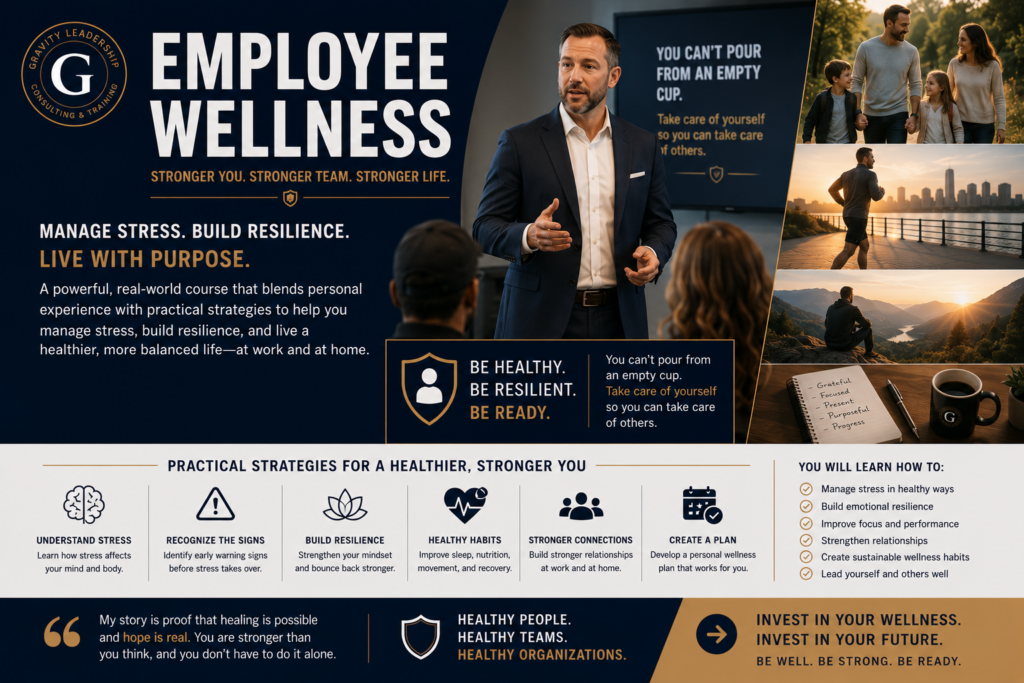
Stress impacts every profession. Whether you work in public safety, healthcare, education, business, government, or nonprofit leadership, prolonged stress can affect performance, relationships, decision-making, and overall well-being.
In this powerful and authentic course, Chris Littrell shares lessons learned from a career in law enforcement, military service, leadership, and his personal journey through post-traumatic stress injury and recovery. Through real stories and practical application, participants gain a deeper understanding of how stress affects the mind and body, how it can quietly accumulate over time, and what steps can be taken to build resilience before stress becomes overwhelming.
This course is not about eliminating stress. It is about learning how to recognize it, manage it, and respond to it in healthy ways. Participants leave with practical tools for improving wellness, strengthening relationships, managing emotional health, and creating sustainable habits that support long-term success both personally and professionally.
Key Topics Include:
- Understanding Stress and Burnout
- Recognizing Early Warning Signs
- Building Personal Resilience
- Sleep, Recovery, and Physical Wellness
- Healthy Coping Strategies
- Emotional Health and Connection
- Leadership and Wellness Culture
- Creating a Personal Wellness Plan
Healthy people build healthy teams. Healthy teams build healthy organizations.
Communication & Situational Intelligence
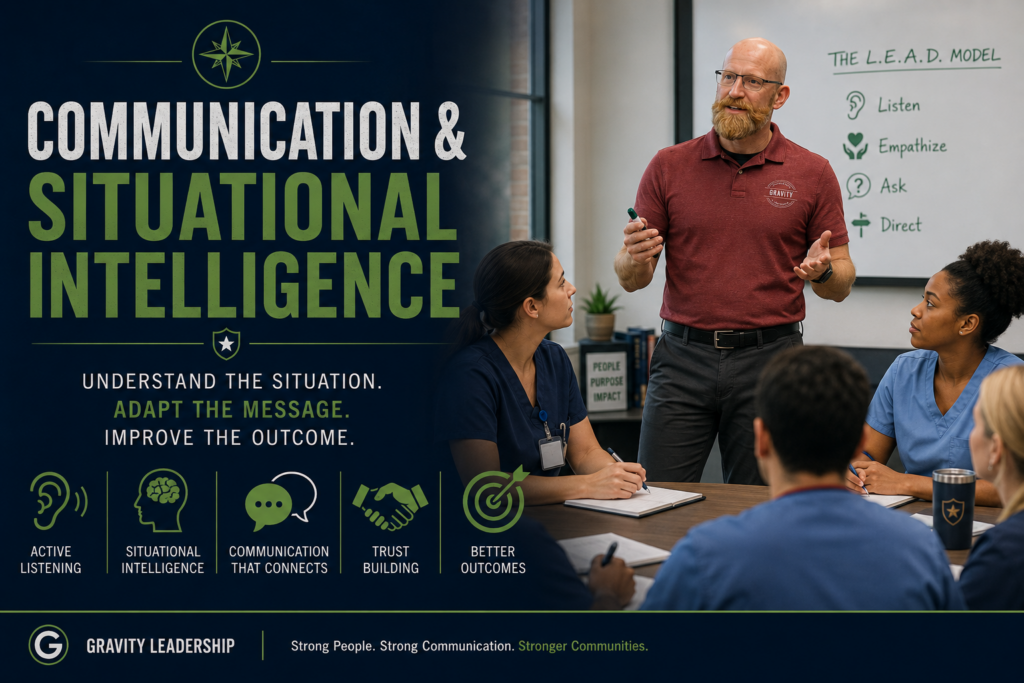
Great communication is more than speaking clearly. It is the ability to understand people, read situations, and adapt your approach to create the best possible outcome.
This interactive course helps participants develop the skills necessary to communicate more effectively in high-stress, fast-paced, and relationship-driven environments. Through practical exercises, real-world scenarios, and group discussion, participants learn how communication impacts trust, teamwork, customer service, patient care, and organizational culture.
Participants explore the principles of active listening, situational intelligence, and adaptive communication while learning how to build stronger relationships and navigate difficult conversations with confidence. The course introduces practical tools that can be applied immediately to improve communication with patients, students, families, coworkers, and community members.
Whether you work in healthcare, education, government, or the private sector, effective communication remains one of the most important skills for creating positive outcomes and lasting relationships.
Key Topics Include:
- Active Listening Skills
- Situational Intelligence
- Adapting Communication Styles
- Building Trust and Rapport
- The L.E.A.D. Communication Model
- Managing Difficult Conversations
- Understanding Intent vs. Impact
- Communication Under Stress
- Creating Better Outcomes Through Connection
Participants leave with practical tools that help them communicate more effectively, strengthen relationships, and increase their ability to lead, influence, and serve others.
Understand the situation. Adapt the message. Improve the outcome.
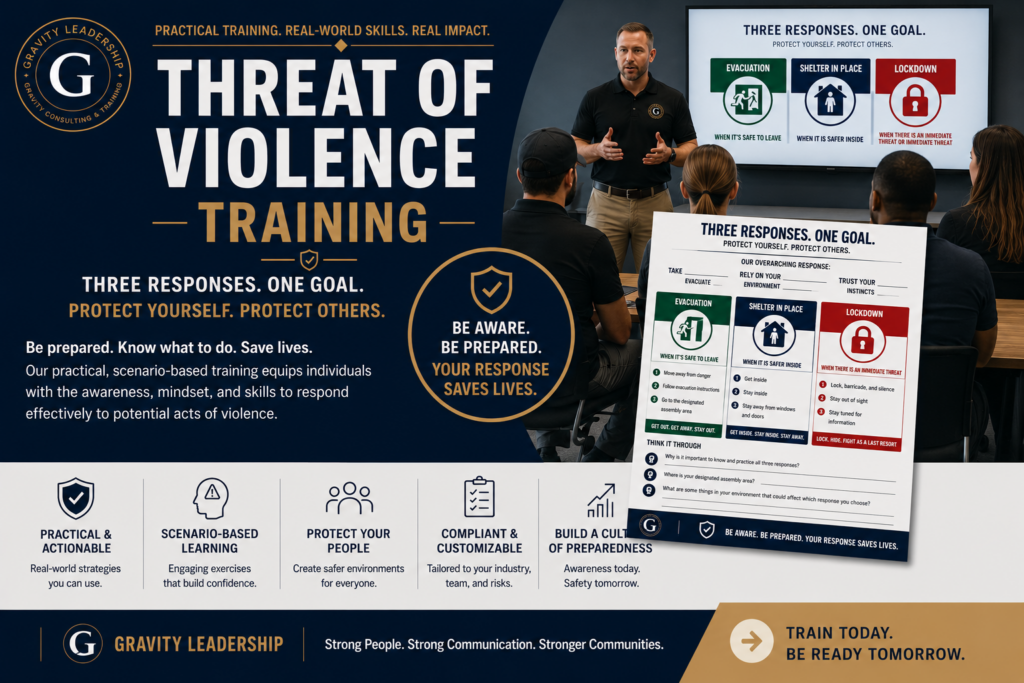
Threat of Violence: Prevention, Preparedness, and Response
Violence in schools, healthcare facilities, and community-serving organizations is rare, but the consequences can be devastating. The best response begins long before a crisis occurs.
This practical and engaging training helps educators, healthcare professionals, administrators, and support staff develop the awareness, confidence, and skills necessary to recognize warning signs, respond effectively during critical incidents, and contribute to a safer environment for those they serve.
Participants learn how concerning behaviors often develop over time, how to identify potential indicators of escalating risk, and how to communicate concerns through appropriate reporting channels. The course also provides practical guidance for responding to emergencies through evacuation, shelter-in-place, and lockdown procedures while emphasizing sound decision-making under stress.
Through real-world examples, discussion, and interactive exercises, participants gain a clearer understanding of their role in violence prevention and emergency preparedness.
Key Topics Include:
- Recognizing Behavioral Warning Signs
- Understanding Threats and Concerning Conduct
- Workplace and Campus Violence Prevention
- Situational Awareness
- Emergency Decision-Making Under Stress
- Evacuation Procedures
- Shelter-in-Place Procedures
- Lockdown Procedures
- Communication During Critical Incidents
- Building a Culture of Safety and Preparedness
Participants leave with practical tools that increase awareness, improve confidence, and strengthen their ability to respond effectively during emergencies.
Prepared people make better decisions. Better decisions create safer outcomes.
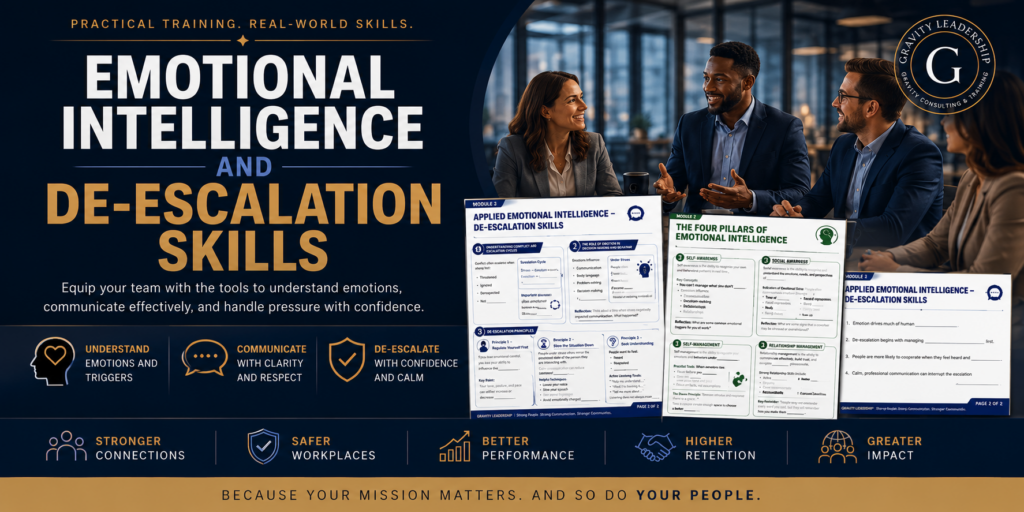
Emotional Intelligence & De-Escalation Skills
Every interaction has the potential to strengthen trust, improve outcomes, and create meaningful connections. Emotional intelligence and de-escalation skills provide professionals with the tools to navigate challenging conversations while maintaining professionalism, empathy, and effectiveness.
This engaging and practical course helps educators, healthcare professionals, administrators, and support staff better understand how emotions influence communication, decision-making, and behavior. Participants learn how to recognize emotional responses in themselves and others, regulate their reactions under stress, and use communication strategies that reduce tension and build cooperation.
Through discussion, real-world scenarios, self-reflection, and practical exercises, participants develop skills that improve interactions with students, patients, families, coworkers, and community members. The course emphasizes that de-escalation is not simply about resolving conflict—it is about creating an environment where people feel heard, respected, and understood.
Participants leave with practical tools they can immediately apply to strengthen relationships, improve teamwork, enhance service delivery, and navigate difficult conversations with greater confidence.
Key Topics Include:
- The Four Pillars of Emotional Intelligence
- Self-Awareness and Self-Regulation
- Understanding Emotional Triggers
- Active Listening Skills
- Empathy and Perspective-Taking
- Communication Under Stress
- De-Escalation Principles and Techniques
- Managing Difficult Conversations
- Building Trust and Psychological Safety
- Professional Communication Strategies
Whether working with patients, students, families, coworkers, or community members, participants learn how emotional intelligence and effective communication create stronger relationships and better outcomes.
Calm people communicate better. Better communication creates better outcomes.